



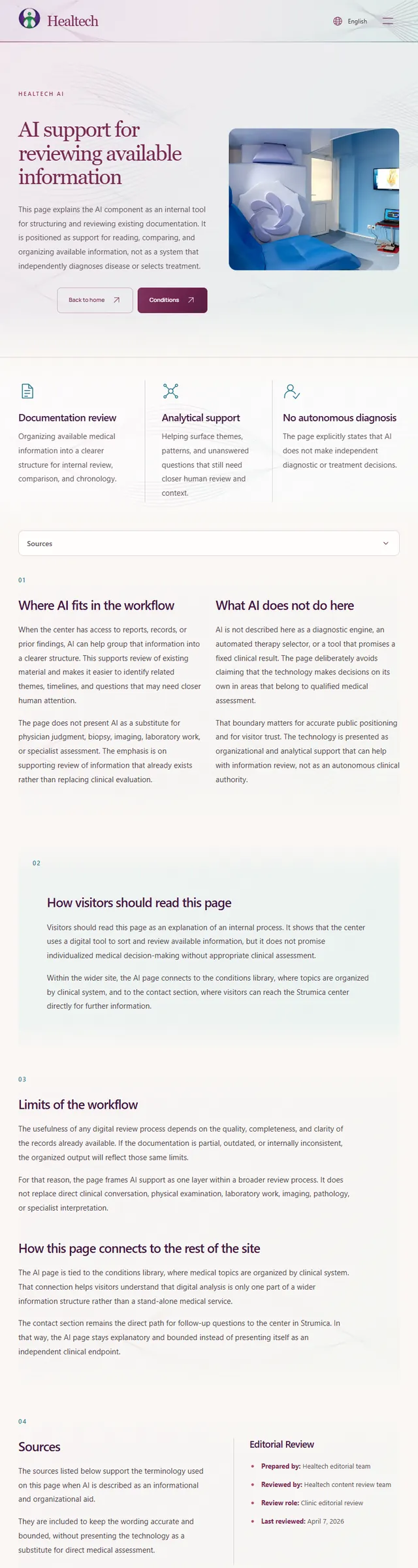
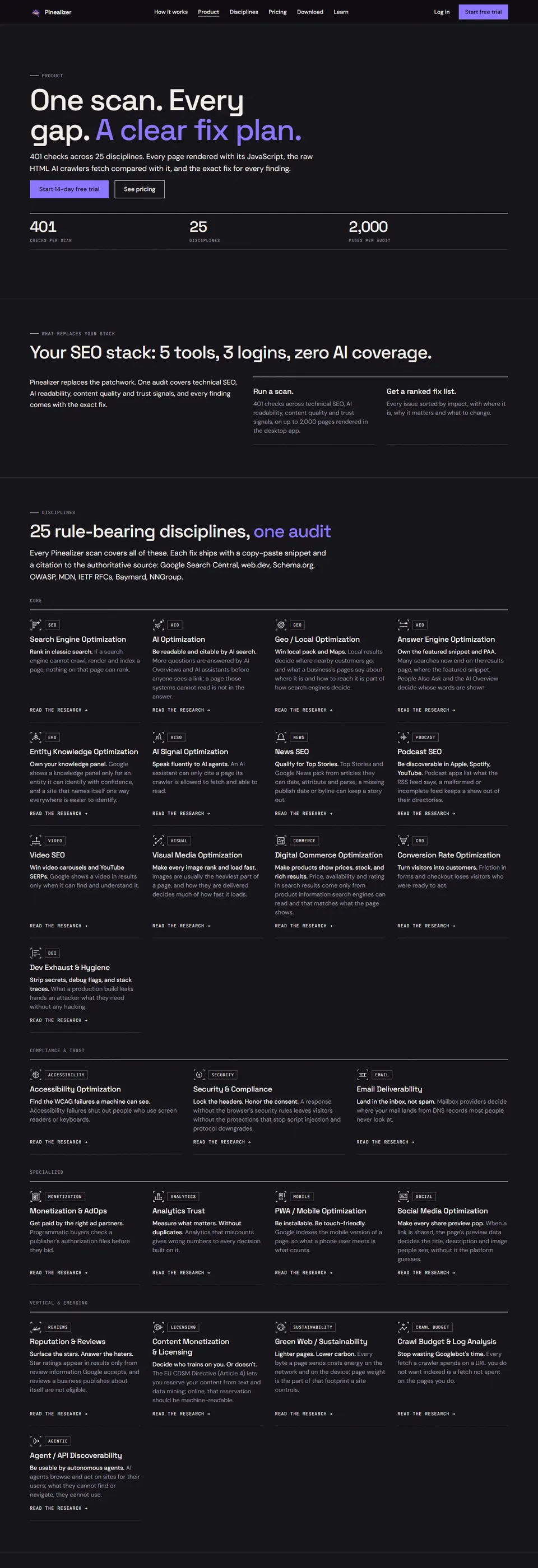
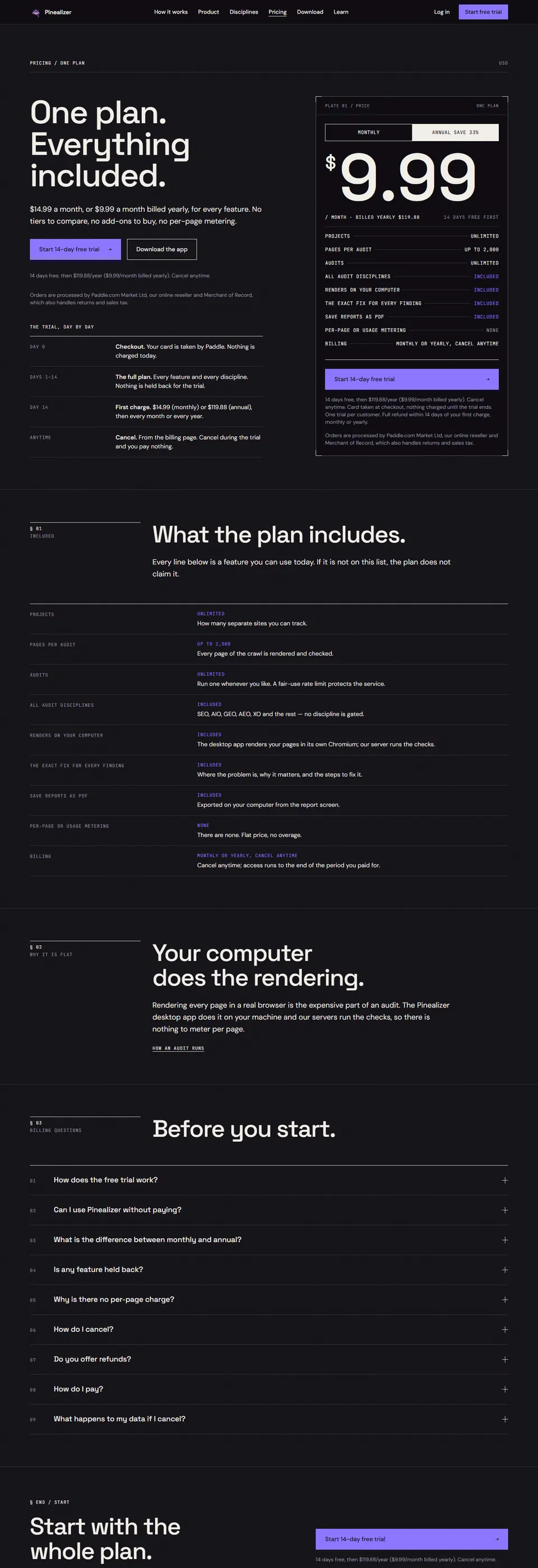
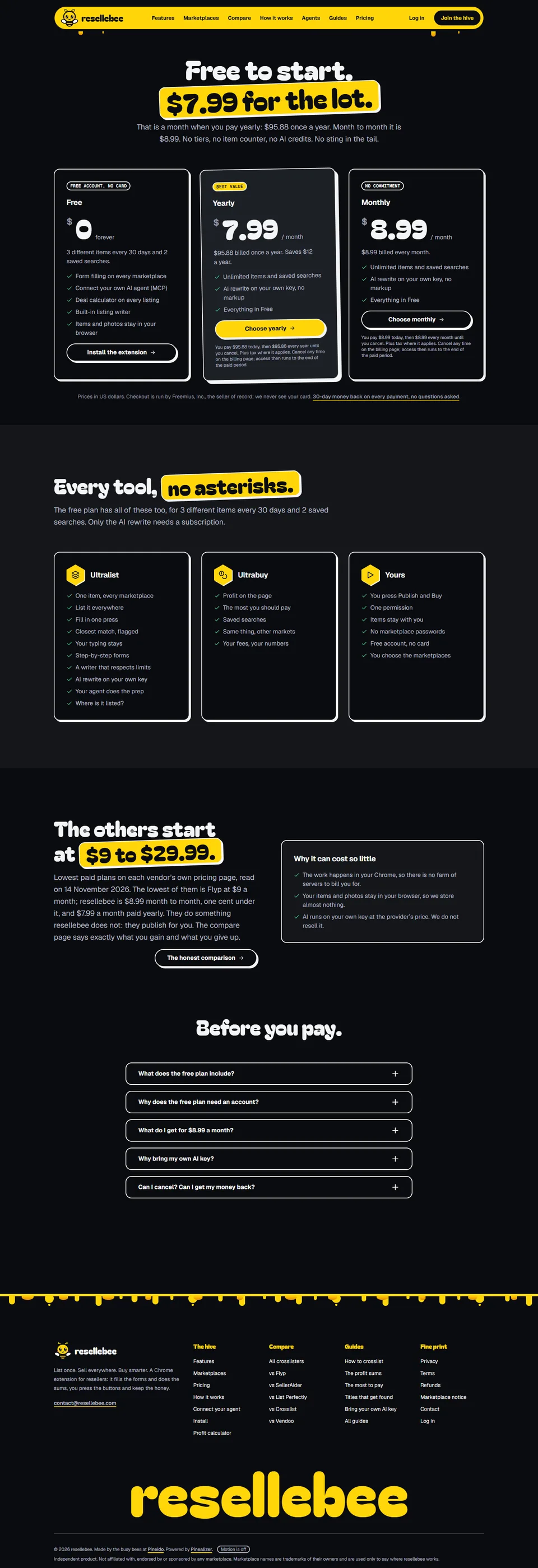














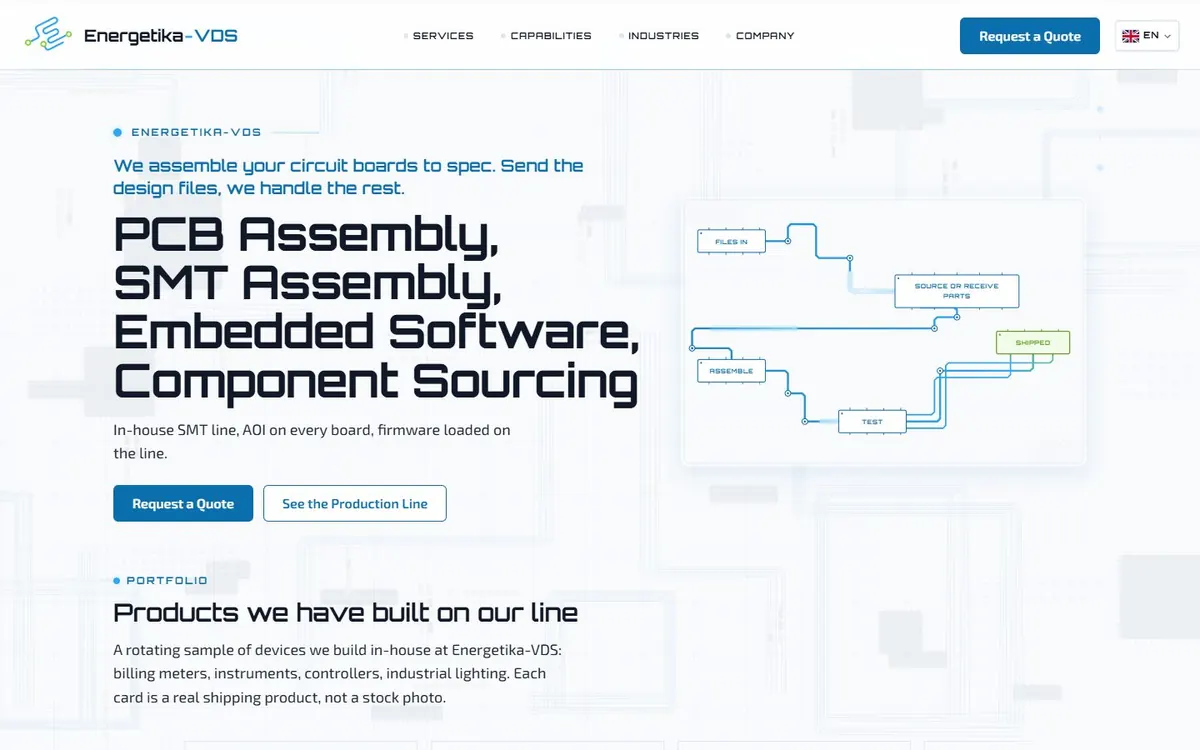
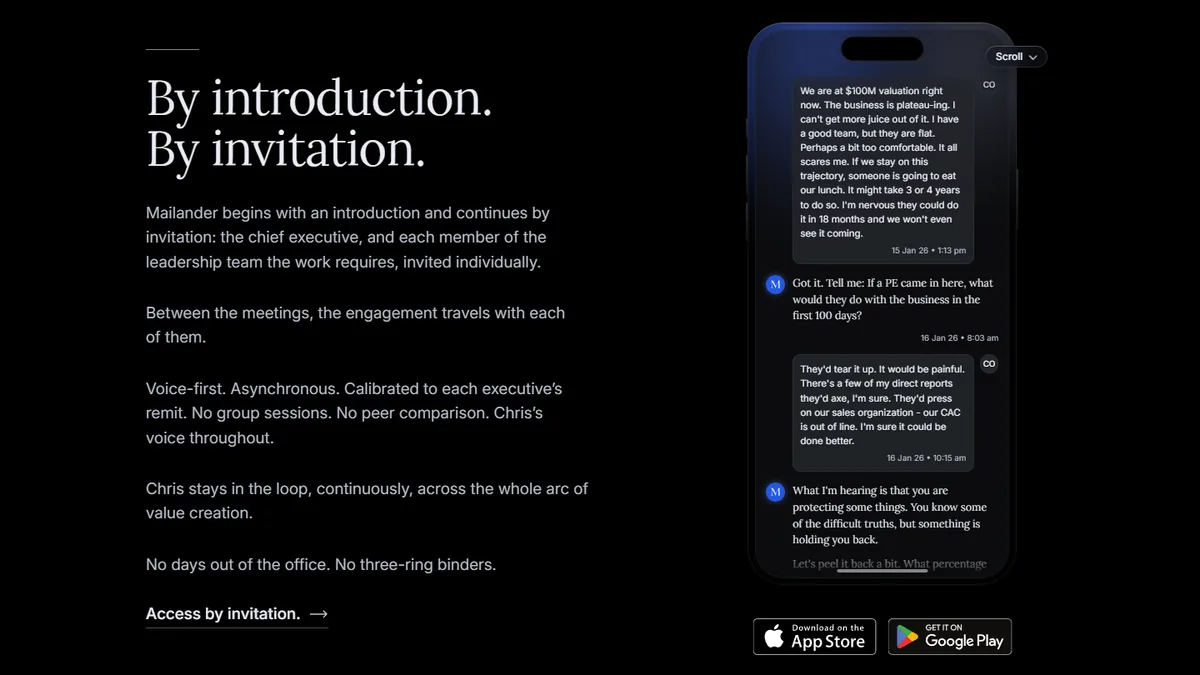


We build AI,
automations, apps,
and
websites that
run your business

Tell us what you need built. We scope it to a fixed price, ship it in a 30-day sprint, and hand you the keys. You own the code, technical SEO is built in, and it runs fast and secure from day one.

One conversation. A clear plan.

What we build for you

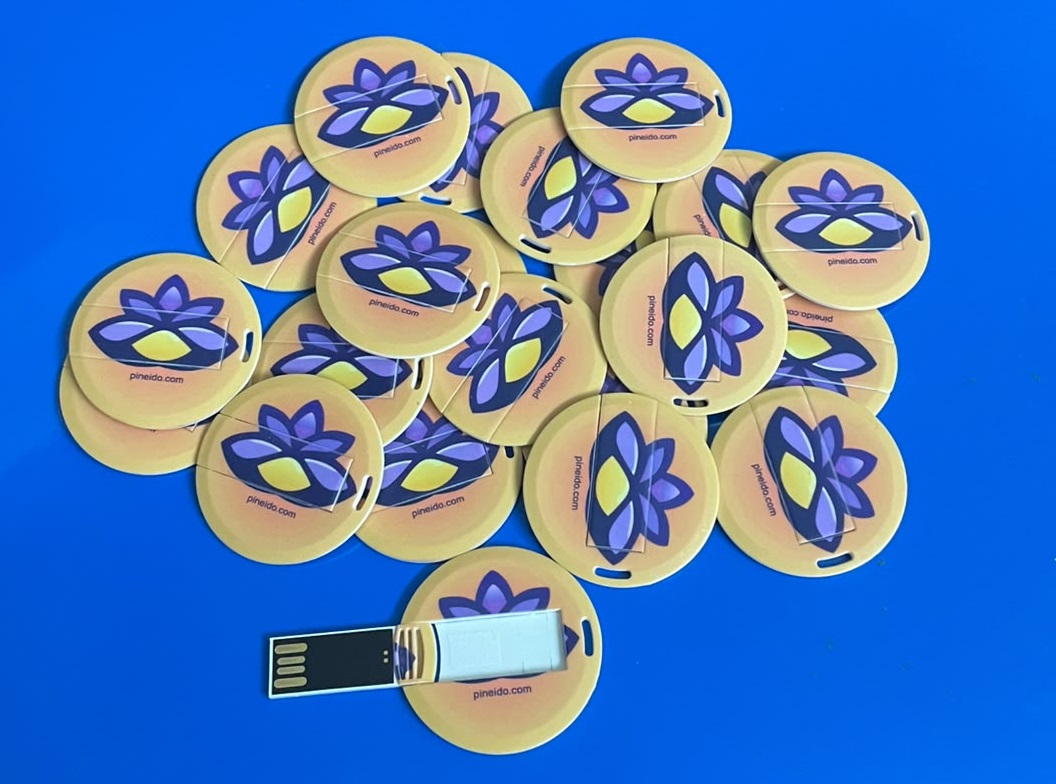
Explore our software services and local AI expertise, or start with the Pineido Studio USB product. Custom projects have their own agreed scope and price.

  • Automations

    We turn the manual, repetitive work eating your team's day into a system that just runs.

    • We map inputs, approvals, and handoffs first
    • Connected to the tools you already use
    • Runs on its own, owned by your team
    See how we build it: Automations
  • Apps

    Custom apps and internal tools built around how your team actually works, replacing the spreadsheet or tool that holds you back.

    • Built around your real workflow, not a template
    • A working version in your hands before the sprint ends
    • Shipped to production and yours to extend later
    • Runs on iPhone, Android, Windows, Mac and the web, one app for every device
    • Android TV apps too, for the big screen
    See how we build it: Apps
  • Websites

    Fast, secure marketing sites and portals built only for your business, not a template everyone else is using.

    • Light pages that hold up on launch day
    • Technical SEO wired in from the first line of code
    • You own the code, no monthly lock-in
    See how we build it: Websites

Completely custom. Never a template.

We do not sell WordPress themes with your logo on top. We build the shop, the app or the site you picture, from scratch, around how your business really works. You bring the dream. We make it run.

  • Your design

    Drawn for your brand, not picked from a theme store.

  • Your way of working

    Built around how you sell and work, not around the limits of a plugin.

  • Your code

    Yours from day one. Nothing to rent, nothing locking you in.

How a 30-day build works

  1. Days 1-7

    Scope

    We sit down with you and figure out exactly what to build. No surprises later.

  2. Days 8-14

    First working build

    We show you something real and working. You try it, you tell us what feels off.

  3. Days 15-21

    Refine and connect

    We polish it, connect it to the tools you already use, and test every corner.

  4. Days 22-30

    Go live

    You go live. We hand over the keys, the code, and a short guide so your team can run it.

Shipped case studies.

What was broken, what we changed, and what shipped.

Breaking the "Launch Date" Curse

A U.S. B2B SaaS company, nine months into a website rebuild. Engineering and Marketing were barely speaking. Every week the C-suite asked for a date. Every week nobody could give one.

Before

No single person was willing to say no to a VP's feature request. Every new idea reopened the release boundaries. The team had stopped trusting the roadmap because the roadmap had never held.

What we fixed

Ran a "Keep vs. Kill" session where every open request had to survive a single question: does this need to be in V1.0, or can it wait? The list of things that could wait was longer than anyone wanted to admit. Shifted to V1.0 + V1.1 and enforced a 24-hour decision rule, unresolved trade-offs were called the next morning based on pre-agreed goals, not whoever was loudest.

After

  • Site shipped six weeks after engagement started
  • No release-plan changes in the final four weeks of build
  • First time Engineering and Marketing agreed on a launch date, and held it
“For the first time in a year, the project actually felt calm.”
Amara, VP of Marketing, U.S. B2B SaaS

42 Vulnerabilities and an Intern's AWS Key

A growing tech company, production servers down, team in panic mode, no one sure what had changed or who had touched what.

Before

The team had been guessing the root cause for hours while the site stayed down. There was no visibility into who had access to what, and no process for finding out fast.

What we fixed

Ran a full tech stack audit starting from IAM roles and access logs. Traced the outage within hours. When I asked who had recently been given AWS access, they told me it was the intern. The audit surfaced 42 critical security vulnerabilities: overprivileged roles, exposed keys, and open configs no one knew existed.

After

  • Root cause found and production restored in the same engagement
  • 42 critical vulnerabilities patched, access controls rebuilt from scratch
  • Formal access policy introduced, no production access without role-based permissions
“What a load of spaghetti with sauce.”
Tariq, on seeing the audit results

The Zero-Drop Migration

An enterprise retailer in Singapore where organic search drives the majority of revenue. A previous redesign had cut their rankings in half overnight. Nobody had forgotten.

Before

Engineering wanted to freeze the new site in staging until every SEO edge case was resolved. Marketing needed it live. Leadership kept calling meetings instead of making calls. The previous traffic drop meant nobody trusted anyone's judgment, including their own.

What we fixed

Established an SEO compliance checklist as a hard launch gate, no exceptions, nothing fixed after. Rolled out to 5%, then 10% of traffic with live revenue monitoring running throughout. Served as the single point of accountability between SEO, Engineering, and Leadership so neither team could stall behind the other.

After

  • Traffic held flat through the entire migration, no repeat of the previous drop
  • Core Web Vitals moved from amber to green across the board
  • First launch in the company's history with no post-launch fire drills
“This was the first launch where the whole team actually slept the night before.”
Priya, Head of Digital Platforms, Singapore Retail

Six Months of AI Strategy, Zero Lines of Code

A UK logistics company with board-level AI budget and nothing to show for it. Six months in, the team had a vendor shortlist and a 40-page strategy deck. Nothing was running.

Before

Three vendors were pitching conflicting approaches. Two proof-of-concepts had already been abandoned mid-build. The team had quietly stopped believing anything would ship. The real problem wasn't the technology, nobody had committed to solving one specific thing first.

What we fixed

Ran a single-use-case session to cut the entire roadmap down to one measurable starting point: automating the manual matching of delivery exceptions to resolution workflows. Built a working integration in under four weeks and showed the team something real before anything else on the roadmap moved.

After

  • First AI integration in production within four weeks of engagement
  • Exception-handling backlog cleared without adding headcount
  • Board presentation replaced the slide deck with a live demo
“We spent eight months talking about AI. You shipped something in three weeks.”
Declan, Head of Operations, UK Logistics

The App Nobody Wanted to Touch

An Australian healthcare admin company running on an internal tool built five years ago by a developer who had since left. Nobody fully understood it. Adding any feature took weeks. The team had learned to work around it instead.

Before

The CTO knew it needed to be rebuilt but couldn't get leadership sign-off without proof the new version would actually work. Every previous attempt at a rewrite had collapsed under expanding requirements. The word "rewrite" had started to feel like a threat.

What we fixed

Didn't pitch a full rewrite. Identified the single most-used workflow, patient onboarding, and built a proof module running in parallel with the existing app. Leadership saw it working in four weeks. After that, the business case for the full rebuild wrote itself.

After

  • Onboarding time cut from over 12 minutes to under 3
  • Leadership approved the full rebuild within the same quarter
  • First new feature shipped without a three-week regression cycle
“I stopped trying to explain why we needed a new system. I just showed them.”
Fatima, CTO, Australian Healthcare Admin

The AI bill that was paying for HTML

An online retailer used AI to write product descriptions and answer customer emails. In four months the monthly AI bill grew several times over, while the work itself barely grew.

Before

Everyone blamed the model and planned to switch to a cheaper one. The real cause sat one step earlier: the cleaning step had broken and was sending whole raw web pages, menus and scripts included, and one failed item made the whole batch run again.

What we fixed

We measured every request before touching anything, rebuilt the cleaning step so it sends only the product details, retried just the failed item instead of the batch, and added a token budget that raises an alarm the same day.

After

  • 94% fewer tokens per request
  • AI bill down from $11,400 to $1,180 a month
  • About $122,000 saved a year

The AI assistant that searched the wrong shelf

A software company built an AI assistant for its support team. It answered confidently, and cited documents that had nothing to do with the question.

Before

The team spent a month on prompts and bigger models. The fault was underneath: the documents were stored as 2048-number vectors and the questions as 1024-number vectors, so every search compared two different maps.

What we fixed

We tested the search on its own with about a hundred real questions, put the embedding setting in one place that both sides read, re-embedded everything at 1024 overnight, and kept the questions as a test every change has to pass.

After

  • Right document in the top five: from 17% to 94%
  • The support team trusts the assistant again
  • 120 real questions guard every change

What you get with us

A working result in one month, at a price agreed before we start.

  • A decision in days, not months
  • One person on each side who decides
  • A working website, app or automation in one month
  • A fixed price, agreed before any work starts
  • The same senior people from the first call to handover
  • You own the code, the accounts and the data
  • Something real working by day 14, not a slide deck

Get in touch

Tell us what you want built. We tell you where to start and what it takes.

One conversation. A clear plan.

You leave with

  1. A clear plan for the build
  2. An honest answer on cost and time
  3. Concrete next steps